Happy Friday Parents!
New subject material to come...
SOCIAL STUDIES:
Gr. 2 - We just started a unit on Mapping Skills and these are the curriculum expectations that we will be covering from the ministry documents (available on my blog).

- Maps and Globes
Using appropriate
elements of maps
(e.g., a title, symbols
in a legend,
direction, and scale
[non-standard]), to
help them extract
information and/or
when constructing
maps for specific
purposes
- Identifying and
locating countries
on a map or globe
(see, e.g., A3.3)
- Extracting
information from
globes, atlases, and
maps about
location, climate,
and physical
characteristics of
a region
- Identifying and
locating continents,
significant bodies
of water, the
equator, poles, and
hemispheres on
maps or a globe
- Understanding
and using cardinal
directions
- Developing their
ability to use
appropriate
elements of maps
(e.g., a title, symbols
in a legend,
direction, scale
[non-standard],
and colour) to
help them extract
information and/or
when constructing
maps for specific
purposes
Gr. 3 - We began our first unit on Heritage and Identity: Communities in early Canada in the 1800s
describe the impact of some different kinds of settlements (e.g., seasonal settlements of semi nomadic First Nations, trading posts, resource towns, large-scale farms, large towns or developing cities) on the natural environment and on any existing settlements
describe some of the similarities and
differences in various aspects of everyday life
(e.g., housing, clothing, food, religious/spiritual
practices, work, recreation, the role of children)
of selected groups living in Canada between
1780 and 1850
- compare some of the roles of and challenges
facing people in Canada around the beginning
of the nineteenth century with those in the
present day (e.g., the roles of women, men, and
children; challenges related to the environment,
work, community life, the law)
- gather and organize information on major
challenges facing different groups and
communities, and on measures taken to
address these challenges, using a variety of
primary and/or secondary sources (e.g., settler
journals, artefacts, period paintings and drawings,
historical fiction)
- describe how some different communities in
Canada related to each other during this period,
with a focus on whether the relationships were
characterized by conflict or cooperation
This unit is actually a lot of fun believe it or not! I set it up initially with a timeline from BCE to the year 2000 so students can see when certain inventions were made along the time line. This also gives them perspective of which time period we are focusing on (1750s- 1830s). For ex, they see that cars were invented AFTER the period we are studying). Our unit is going to be launched by our field trip to John R. Park Homestead where students will be able to see first hand how life was back in the early 1800s. We are able to do several craftivities to keep it interesting!
MATH: Measurement
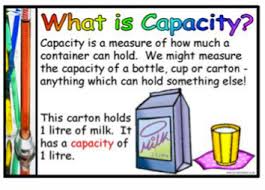
This unit will be divided into two sections for one overall mark; the first test will be on Calendar/Time/Temperature and the second will be on Mass/Capacity.
These two marks will be averaged for one final grade.
Gr 2:
- tell and write time to the quarter-hour,
using demonstration digital and analogue
clocks
- determine, through investigation, the relationship between days and weeks and between months and years.
- describe how changes in temperature
affect everyday experiences (e.g., the
choice of clothing to wear)
- use a standard thermometer to determine
whether temperature is rising or falling
- compare and order a collection of objects
by mass and/or capacity, using non-standard
units (e.g.,“The coffee can holds more sand
than the soup can, but the same amount as
the small pail.”);
- estimate, measure, and record the capacity
and/or mass of an object, using a variety
of non-standard units
- construct tools for measuring time intervals
in non-standard units (e.g., a particular
bottle of water takes about five seconds
to empty)
 Gr.3:
Gr.3:
- read time using analogue clocks, to the
nearest five minutes, and using digital
clocks (e.g., 1:23 means twenty-three
minutes after one o’clock), and represent
time in 12-hour notation
- solve problems involving the relationships between minutes and hours, hours and days, days and weeks, and weeks and years, using a variety of tools (e.g., clocks, calendars).
- estimate, read (i.e., using a thermometer),
and record positive temperatures to the
nearest degree Celsius
- identify benchmarks for freezing, cold,
cool, warm, hot, and boiling temperatures
as they relate to water and for cold, cool,
warm, and hot temperatures as they relate
to air (e.g., water freezes at 0°C; the air
temperature on a warm day is about
20°C, but water at 20°C feels cool)
- choose benchmarks for a kilogram and a
litre to help them perform measurement
tasks
- estimate, measure, and record the mass of
objects (e.g., can of apple juice, bag of
oranges, bag of sand), using the standard
unit of the kilogram or parts of a kilogram
(e.g., half, quarter)
- estimate, measure, and record the capacity
of containers (e.g., juice can, milk bag),
using the standard unit of the litre or parts
of a litre (e.g., half, quarter)
- compare and order a collection of objects,
using standard units of mass (i.e., kilogram)
and/or
- capacity (i.e., litre)

UPCOMING FIELD TRIP:
Our field trip is fast approaching! Thank you for returning all forms and $ promptly! We are scheduled to leave next Friday at 9:00 sharp. These are the winners for the parent/chaperone random draw...
Bushla Nissan (Tomas' Mom)
Melissa Petrucci (Ava's Mom)
Stephany Malizani (Emma's Mom)
That's all for now!
SECRET QUESTION: When was the World Wide Web invented? (Round to the nearest 100)
Coach Wilson
 Please note this week on the agenda that we have a Health Test on Thursday, WOW test on Thursday and THRoW due Thursday all because Friday is a PD Day, NO SCHOOL! I will send home Health books this week to review.
 SECRET QUESTION: Which animal's hair was used in making one of the couches in the parlour of John R. Park Homestead?


